
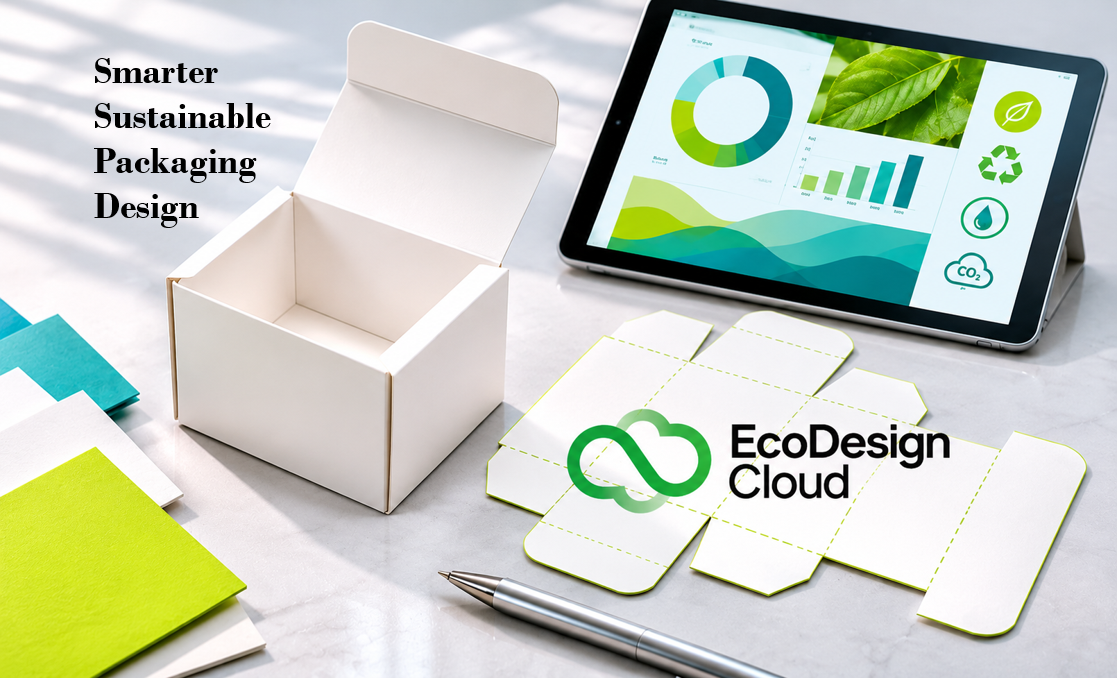
Sustainable packaging design requires more than selecting recyclable materials. Every decision, from paperboard selection and structural design to protective components and production, can influence a package’s environmental impact.
At JohnsByrne, we combine our packaging design and manufacturing expertise with tools like EcoDesign Cloud to evaluate alternatives, identify opportunities for improvement, and help brands make more informed decisions.
By bringing life cycle assessment data into the design process, we can explore packaging solutions that balance environmental performance, product protection, cost, and brand impact.
What Is EcoDesign Cloud?
EcoDesign Cloud is a digital platform that helps brands, designers, and manufacturers assess and manage environmental impact. Its applications include packaging, retail displays, promotional materials, and other assets used to bring products to market.
The platform connects brands and their suppliers around a shared approach to measuring environmental performance, making sustainability information easier to compare and communicate.
At JohnsByrne, we use its life cycle assessment capabilities to help evaluate packaging options and identify opportunities for improvement.
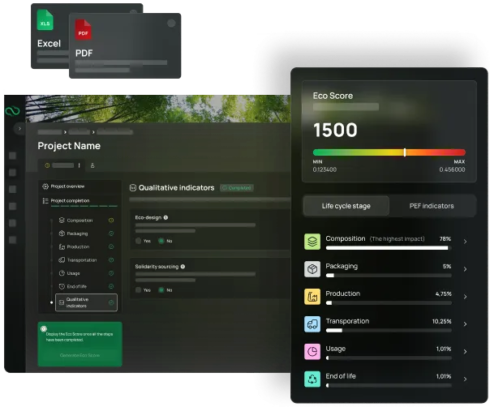
Source: EcoDesignCloud
Understanding Packaging’s Environmental Impact
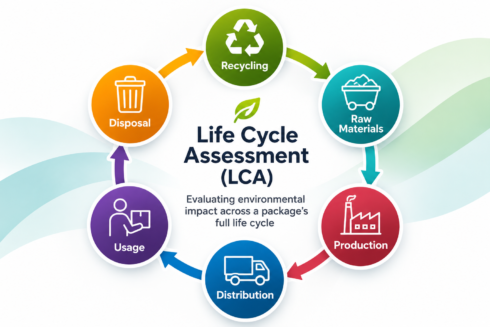
Life cycle assessment (LCA) evaluates environmental impacts across the stages of a package’s life, from raw material sourcing and production through distribution and end-of-life.
This broader perspective helps identify how individual design choices influence a package’s environmental profile. Carbon footprint, water usage, and resource consumption can inform the discussion alongside product protection, manufacturing requirements, cost, and brand presentation.
For example, changing a paperboard stock may also affect the need for a liner or other protective component. Evaluating the complete packaging configuration helps us understand the potential implications of that decision rather than considering each material independently.
Beyond Carbon: A Broader View of Sustainability
EcoDesign Cloud uses the Product Environmental Footprint methodology, commonly called PEF, which evaluates 16 environmental impact criteria, including carbon emissions. This provides a broader basis for assessing environmental performance than looking at carbon alone.
The platform also offers scoring and simulation capabilities that help users compare alternatives and identify opportunities to improve a design. L’Oréal, for example, announced its adoption of EcoDesign Cloud in 2024 to assess point-of-sale and promotional materials, including luxury displays and gifts with purchase.
For packaging development, the value is practical: environmental considerations can become part of the design conversation alongside appearance, functionality, production feasibility, and cost.
How Can Life Cycle Assessment Improve Packaging Design?
Life cycle assessment helps brands compare the potential environmental impacts of different packaging materials and structures. By evaluating raw materials, manufacturing, transportation, and end-of-life, brands can make more informed decisions while balancing performance, cost, and sustainability objectives.
At JohnsByrne, these insights can support material selection, structural optimization, production efficiency, and comparisons of environmental performance. Environmental data is one part of the process; structural expertise, physical testing, and manufacturing knowledge remain essential.
Turning Environmental Data into Packaging Improvements
A packaging redesign often presents several possible directions. Different paperboard stocks, structural configurations, and protective components may each offer advantages.
Life cycle assessment adds another way to evaluate those options. We can use the findings to guide discussions about material selection, structural changes, and opportunities to reduce resource use.
A heavier paperboard stock, for instance, may allow us to eliminate a separate protective component. Assessing the complete structure helps us evaluate that change, while physical testing confirms whether the design meets the product’s performance requirements.
Our goal is to bring these priorities together in a package that works for the product, the brand, and the operations supporting it.
Packaging Redesign in Action: A 56% LCA Improvement Score
Our work with a leading wellness brand demonstrates how environmental assessment and structural design expertise can translate into a practical packaging solution.
The customer wanted a more sustainable and cost-effective package that would also facilitate automation at its filler. The existing design used 18-point C1S paperboard with a triple E-flute liner.
We developed several concepts using different paperboard stocks and explored eliminating the liner. To evaluate the alternatives, we conducted shipping and drop tests along with an LCA simulation.
The resulting solution used 24-point paperboard without the liner. It maintained the package’s premium appearance while reducing costs and achieving pack-out and fulfillment efficiencies.
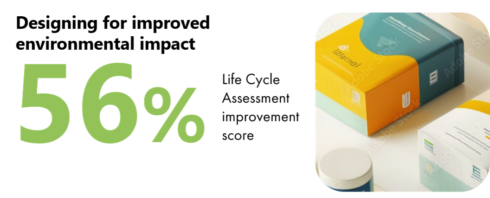
The project achieved a 56% Life Cycle Assessment improvement score, as documented in JohnsByrne’s Responsibility & Sustainability Report. This is an LCA improvement score, not necessarily a 56% reduction in carbon emissions.
By evaluating the paperboard and liner together, we identified an opportunity to simplify the design while addressing the customer’s environmental, operational, and brand objectives. This project illustrates how combining environmental data with packaging engineering can uncover opportunities that might not be apparent when evaluating materials individually.
Supporting Your Sustainable Packaging Goals
Every brand approaches sustainable packaging with different priorities. Some are focused on reducing material use, while others need environmental data to support internal sustainability goals or want to understand how existing packaging could be improved.
At JohnsByrne, we bring these priorities into the design process alongside structural development, production, and performance requirements. Tools like EcoDesign Cloud help us evaluate alternatives and provide data-backed insights, while our design and manufacturing expertise helps turn those insights into practical packaging solutions.
Whether refining an existing folding carton or developing a new packaging concept, our approach focuses on balancing environmental responsibility with functionality, brand impact, and operational efficiency.
Looking to improve the environmental performance of your packaging? JohnsByrne combines innovative structural design, manufacturing expertise, and life cycle assessment tools to help identify opportunities for more sustainable, cost-effective packaging solutions. Let’s explore what’s possible for your next packaging project.
Related Posts
How emerging technologies, evolving consumer expectations, and innovative packaging solutions are shaping the future of brand experiences. Packaging continues to evolve beyond its traditional role … 7 Packaging Trends Shaping Brand Experiences in 2027
VIP event and welcome kit packaging does more than deliver products or gifts. It builds anticipation, recognizes valued recipients, and turns special moments into memorable … VIP Event & Welcome Kit Packaging: Creating Memorable Brand Experiences
JohnsByrne, a leading national provider of premium packaging and display solutions, has earned a Judge’s Award in the Paperboard Packaging Council’s (PPC) 2026 Paperboard Packaging … JohnsByrne Wins Judge’s Award at 2026 Paperboard Packaging Council Awards